
Coconut Meringue Pie
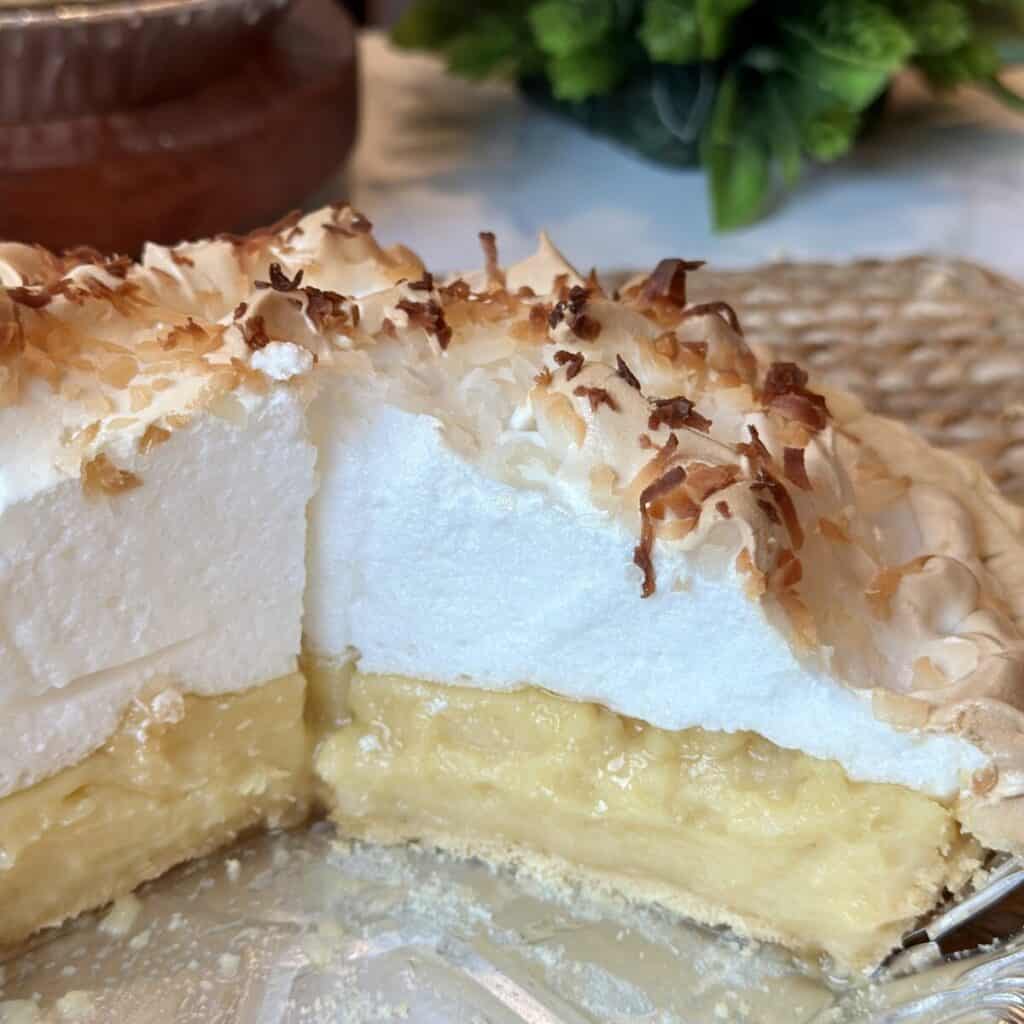
A slice of Coconut Meringue Pie is a slice of heaven! A buttery, flaky pie crust filled with a luscious coconut custard, topped with a cloud-like meringue that’s lightly toasted to perfection. It’s a risk-free simple dessert recipe that’s been in my family for generations.
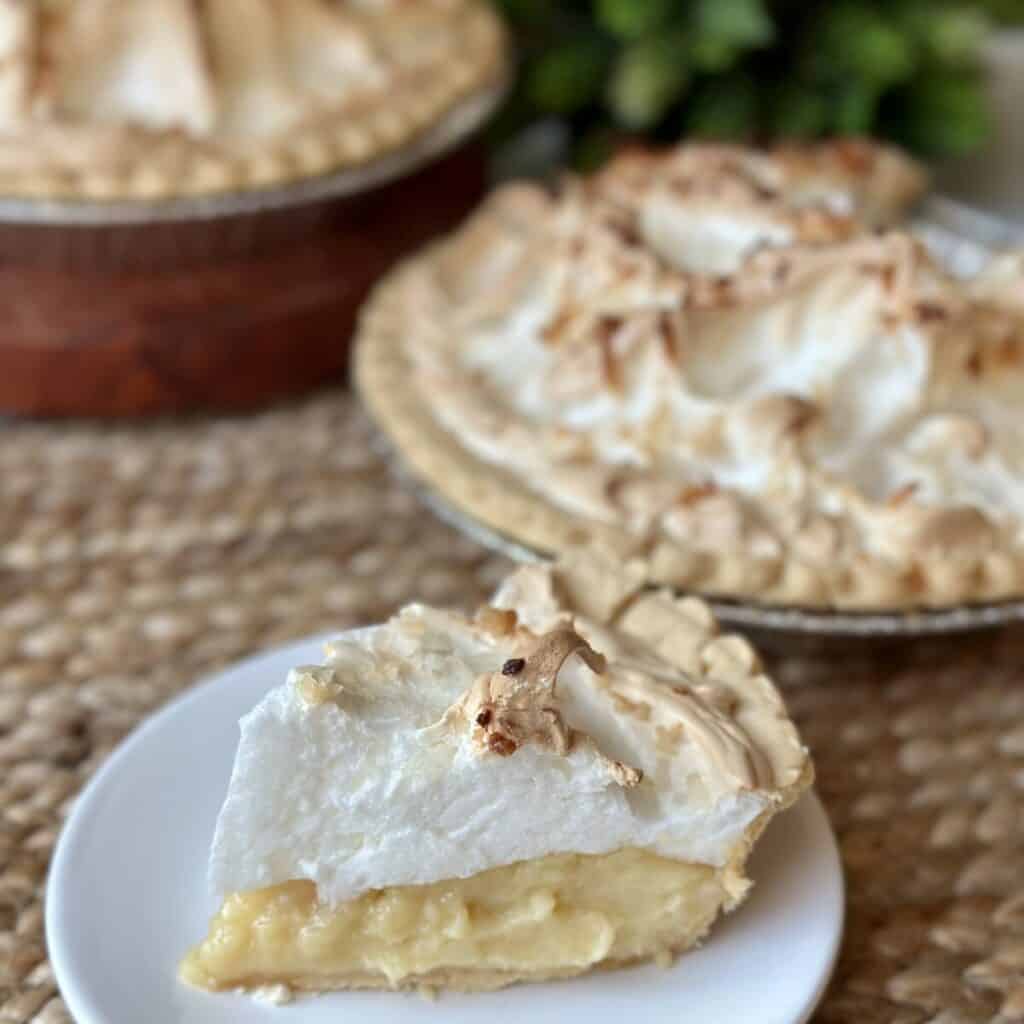
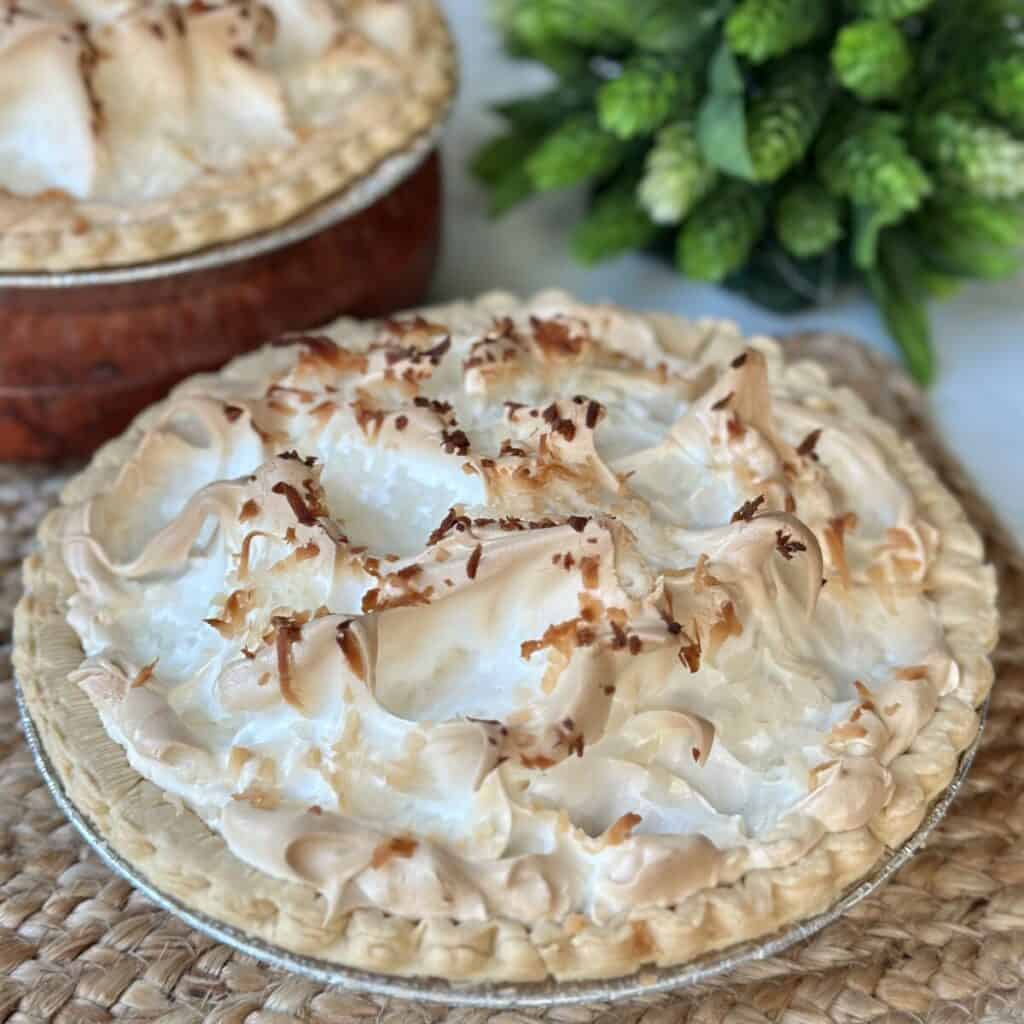
Indulge in the ultimate dessert with this irresistible Coconut Cream Meringue Pie recipe! Crafted with a pre-baked flaky crust, thick and velvety sweet coconut filling, heavenly meringue, and toasted coconut to garnish, it’s the perfect balance of sweetness and creaminess in every slice.
Table of Contents
Save The Recipe!
Add your email below and we’ll send it straight to your inbox+ you’ll receive all our newest recipes!
This dessert recipe is one that was passed down to from my mom to me. We’ve tested and refined it so many times it really could be an award-winning pie. It’s a classic dessert that everyone loves.
Coconut Cream Pie vs. Coconut Custard Pie
While both coconut cream and coconut custard pie share similarities, they are different. The primary distinction is the filling composition and texture. Coconut cream pie typically features a filling made on the stovetop with coconut milk or shredded coconut, milk, sugar, egg yolks, and a thickening agent such as flour or cornstarch, resulting in a rich, creamy texture. This filling is often topped with whipped cream or meringue for added lightness.
On the other hand, coconut custard pie consists of a filling primarily composed of eggs, sugar, milk, and shredded coconut, omitting the use of a thickening agent. The filling can sometimes be cooked stovetop or not, but is almost always baked in the shell. This results in a softer, more delicate custard-like texture without the additional creaminess found in coconut cream pie.
Additionally, coconut custard pies are often baked without a topping, showcasing the simplicity of the custard filling and the natural sweetness of the coconut.
Why You’ll Love this Recipe
- Rich Creaminess: The creamy coconut filling has a melt in your mouth texture. The richness of the filling is perfectly complemented with the light, sweet meringue and flaky crust.
- Simple Ingredients: While this dessert might appear complex to make from the outside, it actually has familiar ingredients that come together easily and beautifully!
- Sweet Memories: For many, this is a classic dessert that carries special memories. It’s a great recipe for family gatherings, holiday celebrations, or special occasions.
- Tried and True: This recipe has been made successfully hundreds of times. With easy-to-follow instructions and my simple tips and tricks, you’ll be able to create the perfect coconut meringue pie.
Laura Ashley’s Tip: This coconut cream pie with meringue has been passed down multiple generations in my family and made dozens of times. If you don’t like coconut simply omit it, this recipe also makes the most delicious vanilla cream pie.
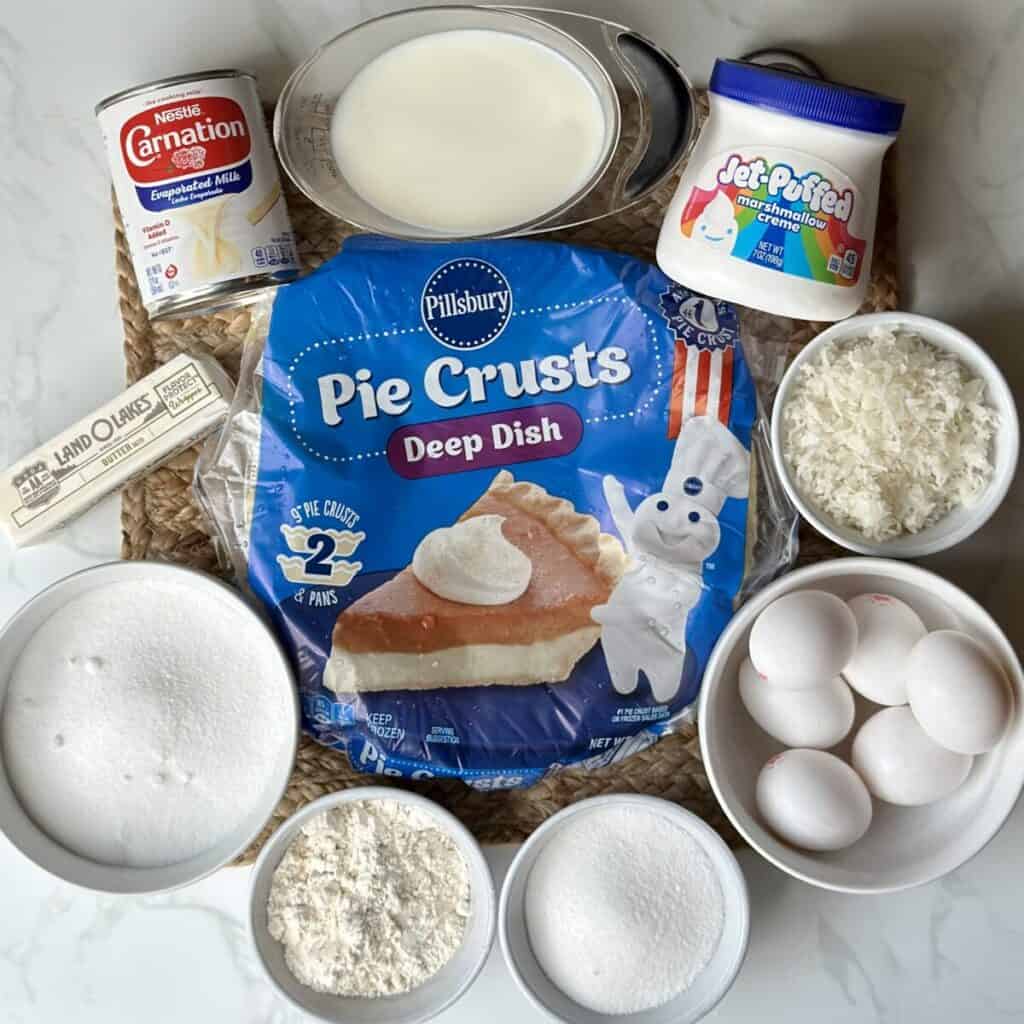
Ingredients for Coconut Cream Pie
Scroll Down for Ingredient Amounts Listed in the Recipe Card Below
For the Coconut Filling:
- Sugar: Adds sweetness to the filling.
- Flour: Acts as a thickening agent to give the filling its creamy consistency.
- Milk: Provides liquid for the filling base and contributes to the creamy texture.
- Egg Yolk: Helps bind the filling together and adds richness and creaminess.
- Evaporated Milk: Adds richness and creaminess to the filling without making it overly liquidy.
- Butter: Adds richness and flavor to the filling.
- Coconut: Provides the main flavor and texture to the filling, giving it the characteristic coconut cream taste and texture.
- Store-bought Pie Crust: Serves as the base and foundation for the creamy filling.
For the Meringue Topping:
- Egg Whites: Provides the structure and volume for the meringue when beaten. They also contribute to the airy texture.
- Sugar: Sweetens the meringue and helps stabilize the egg whites while they are being whipped.
- Marshmallow Cream: Adds stability, sweetness, and a slightly chewy texture to the meringue, enhancing its flavor and texture.
Tools You’ll Need
- Small Saucepan
- Whisk
- Spatula
- Liquid Measuring Cups
- Measuring Cups and Spoons
- Hand Mixer or Stand Mixer
How to Make Coconut Meringue Pie
Filling
- In a small saucepan, combine sugar and flour. Whisk in evaporated milk and egg yolks until smooth. Turn the pan to medium heat.
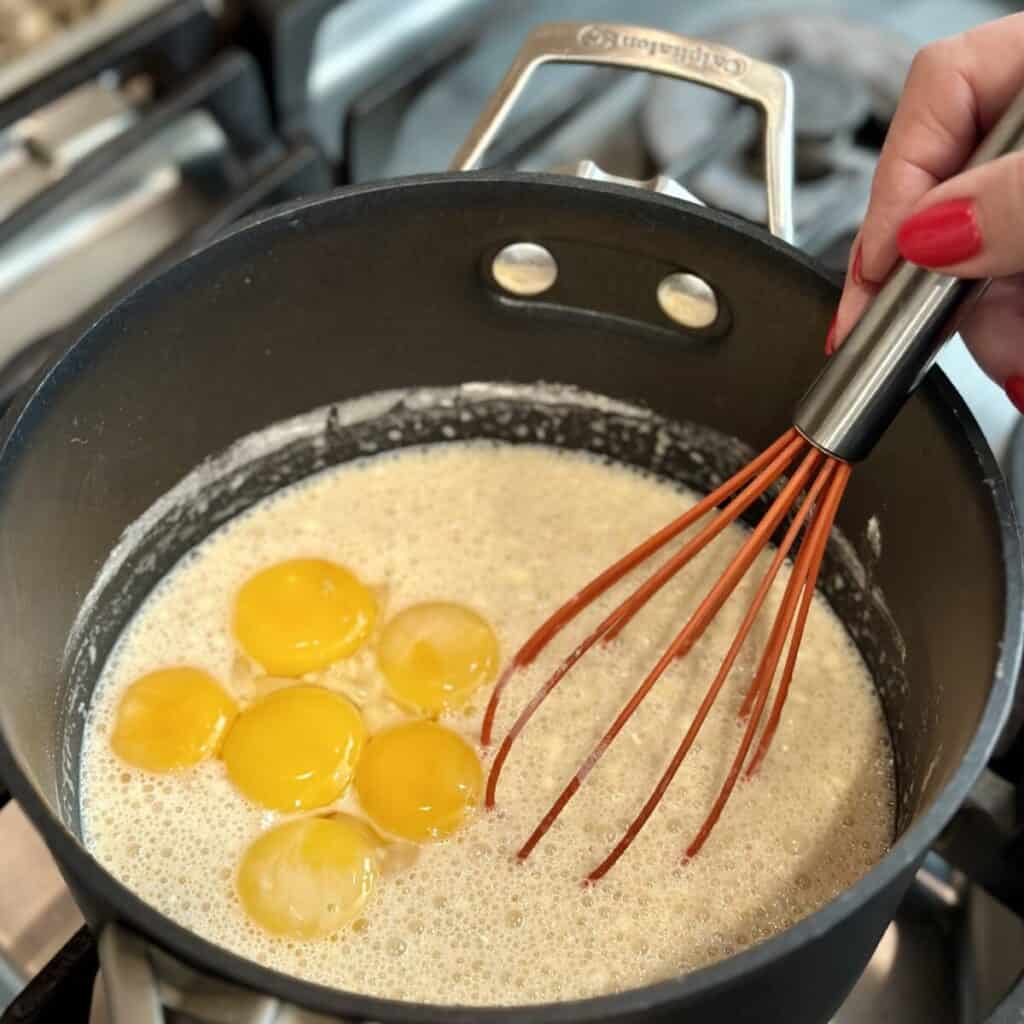
- Stirring constantly, add milk. Once the sugar dissolves, add butter and continue stirring.
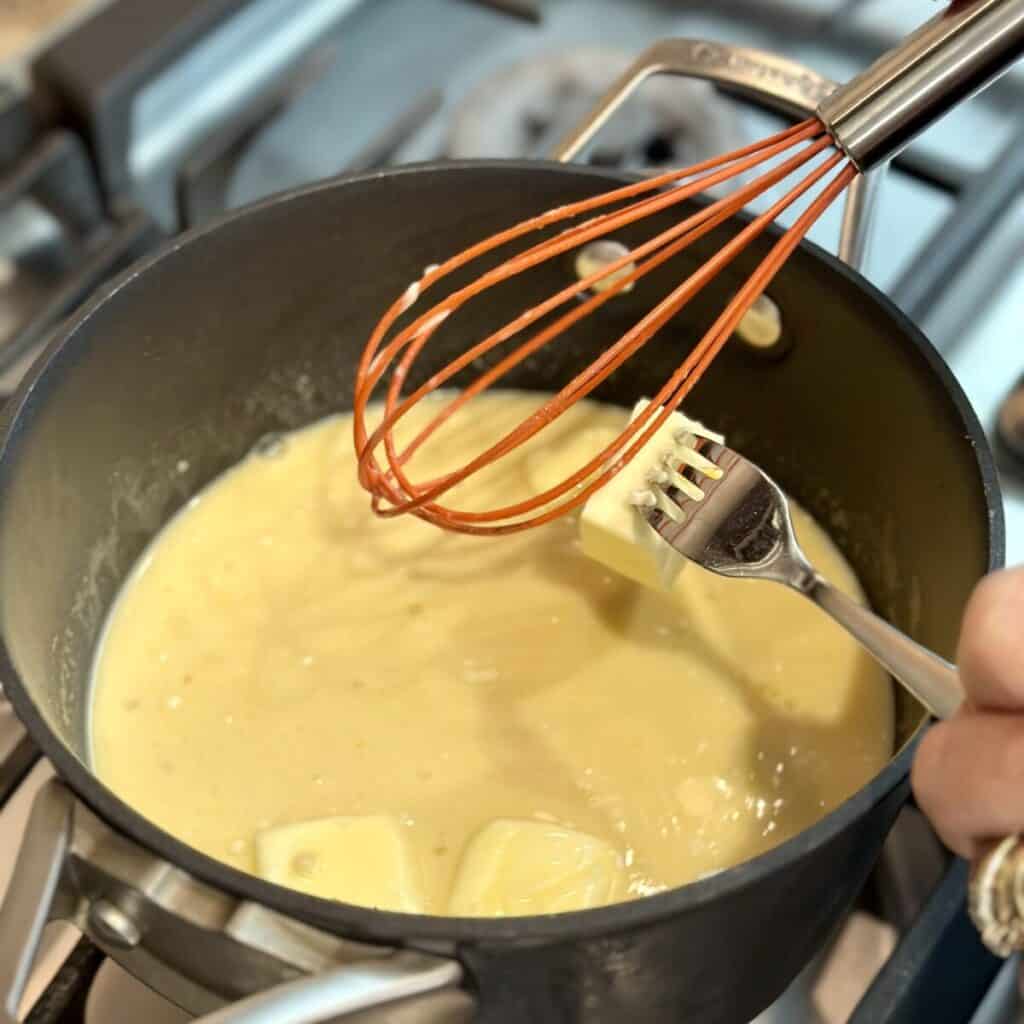
- Cook until mixture thickens and comes to a gentle boil. The mixture will appear to bubble or burp. This should take about 5-7 minutes.
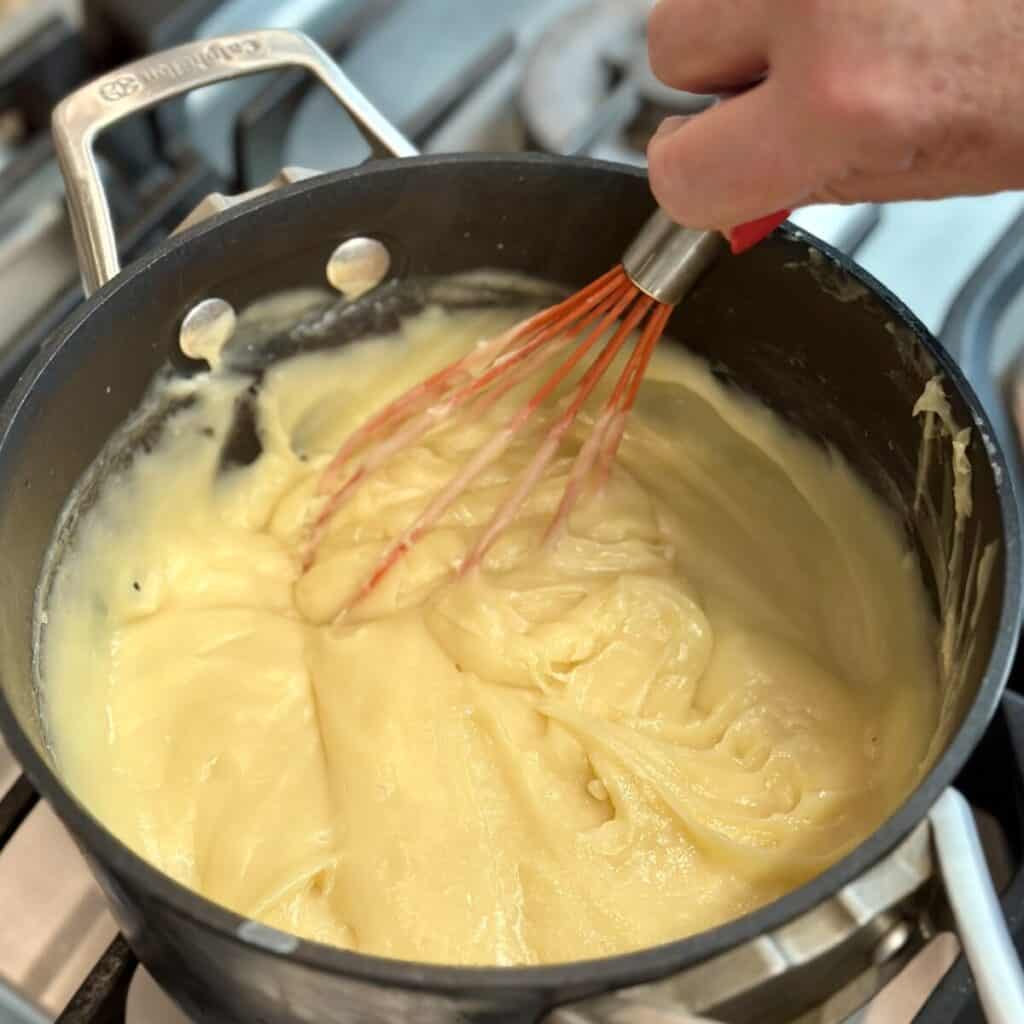
- Turn off the heat and carefully fold 1/2 cup coconut into the hot filling.
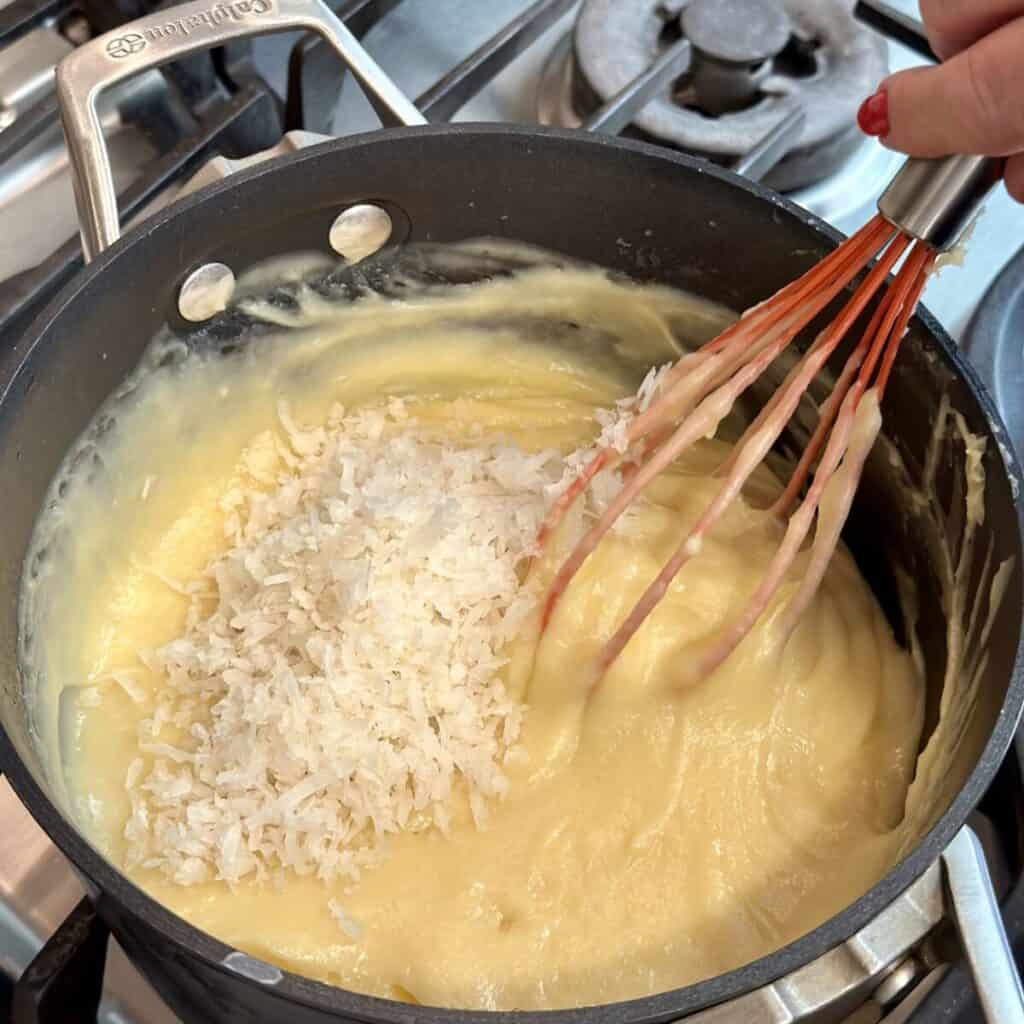
- Divide the coconut cream filling equally into the pre-baked pie shells.
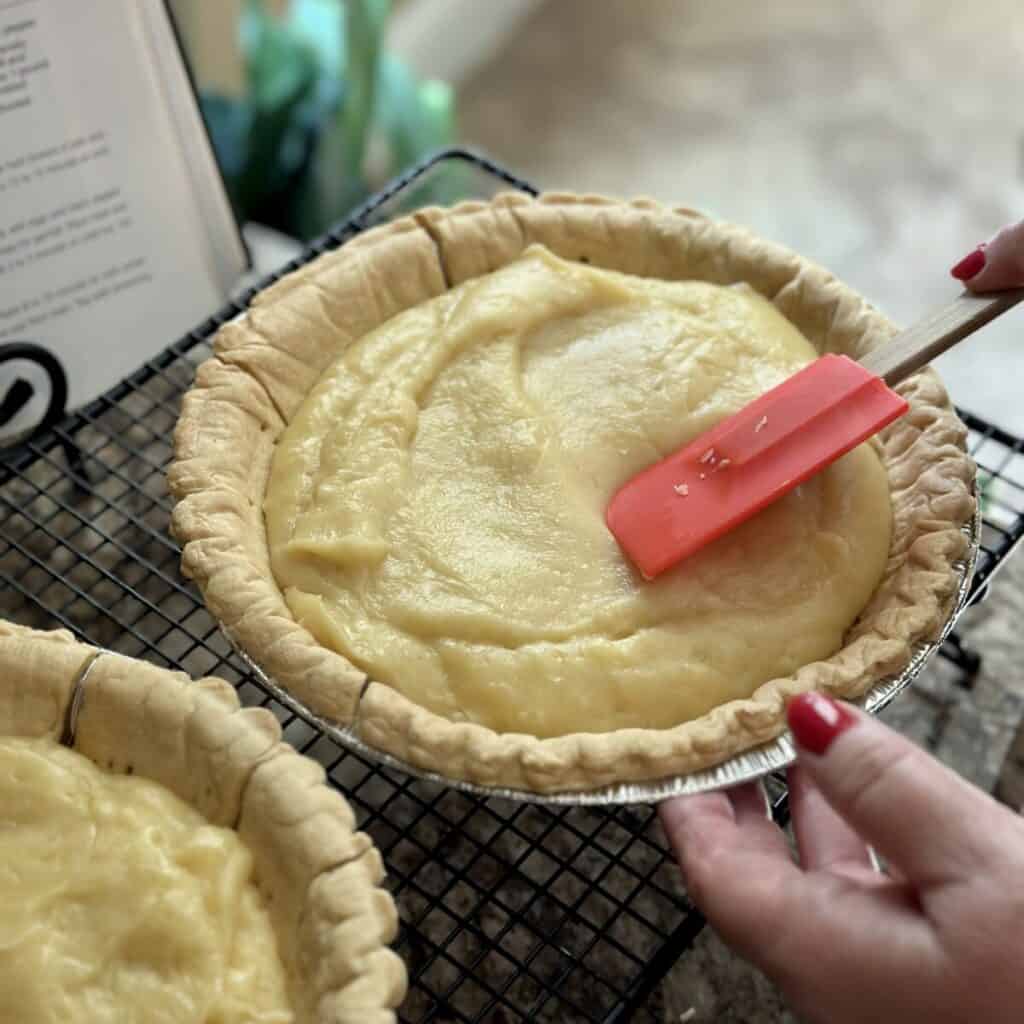
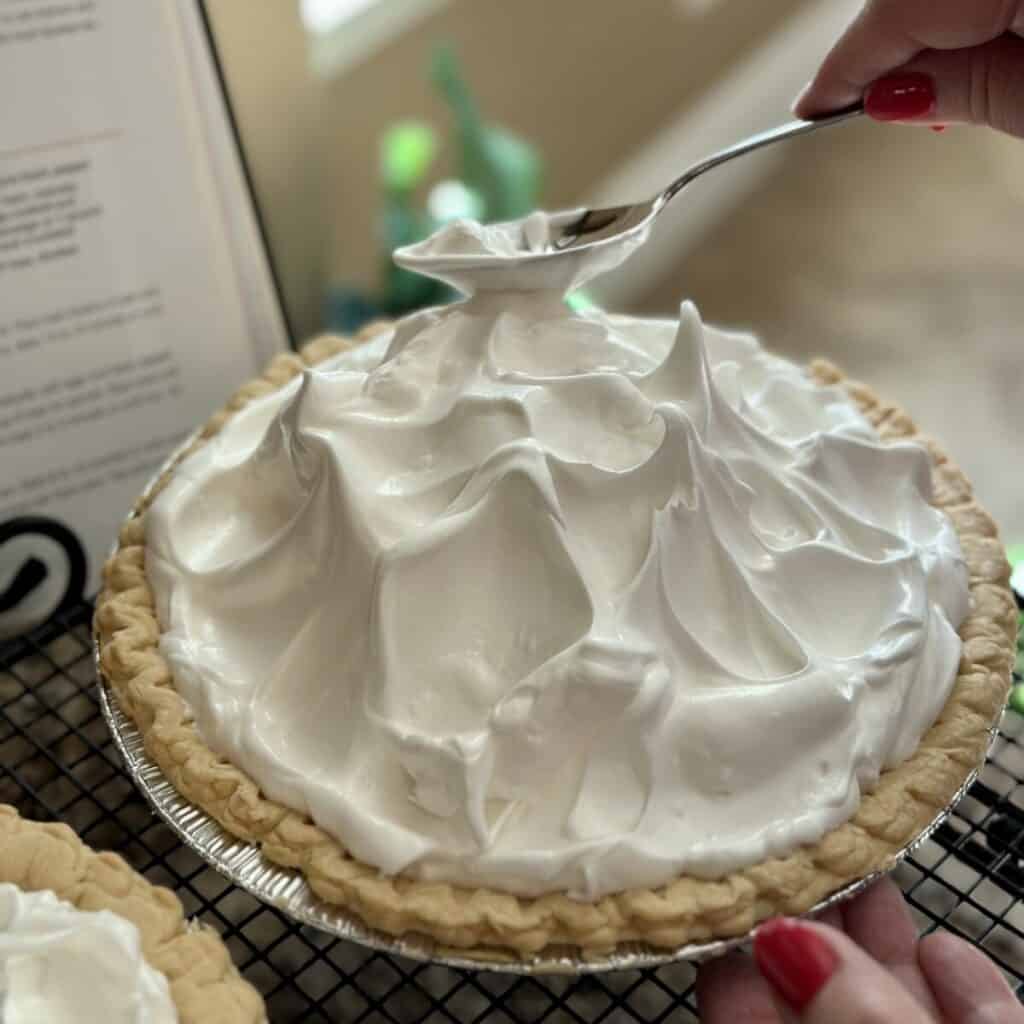
- Quickly spread the meringue over the hot pie filling. Spread the meringue to the edge of the pie pastry to seal it and prevent it from shrinking as it bakes (see below). Use a spoon to swirl and twist the meringue as you spread it.
- Evenly sprinkle the remaining coconut on top of both pies.
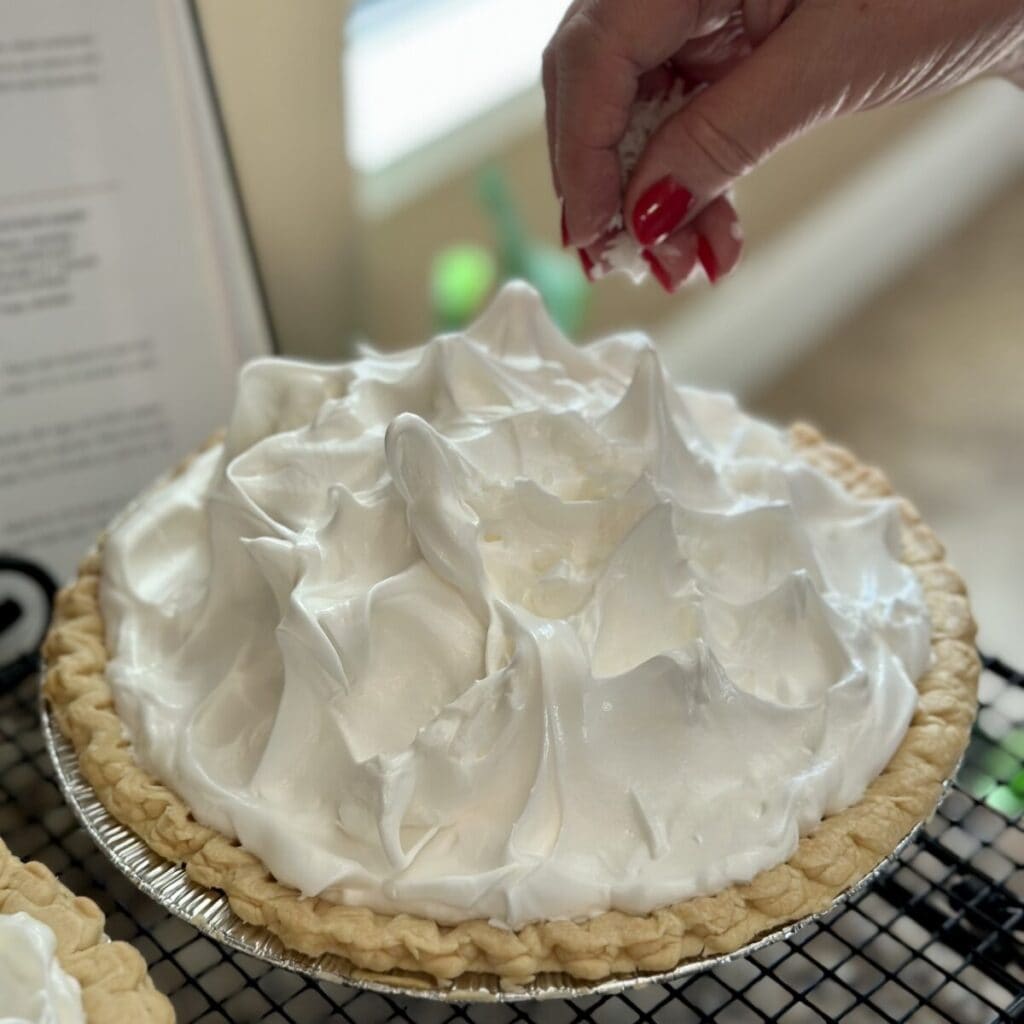
- Bake at 350°F 15-17 minutes, or until the meringue is golden brown on top.
Meringue
- In a clean, dry mixing bowl, beat the egg whites with the whisk attachment on medium speed with an electric mixer until they become frothy. This usually takes about 1-2 minutes.
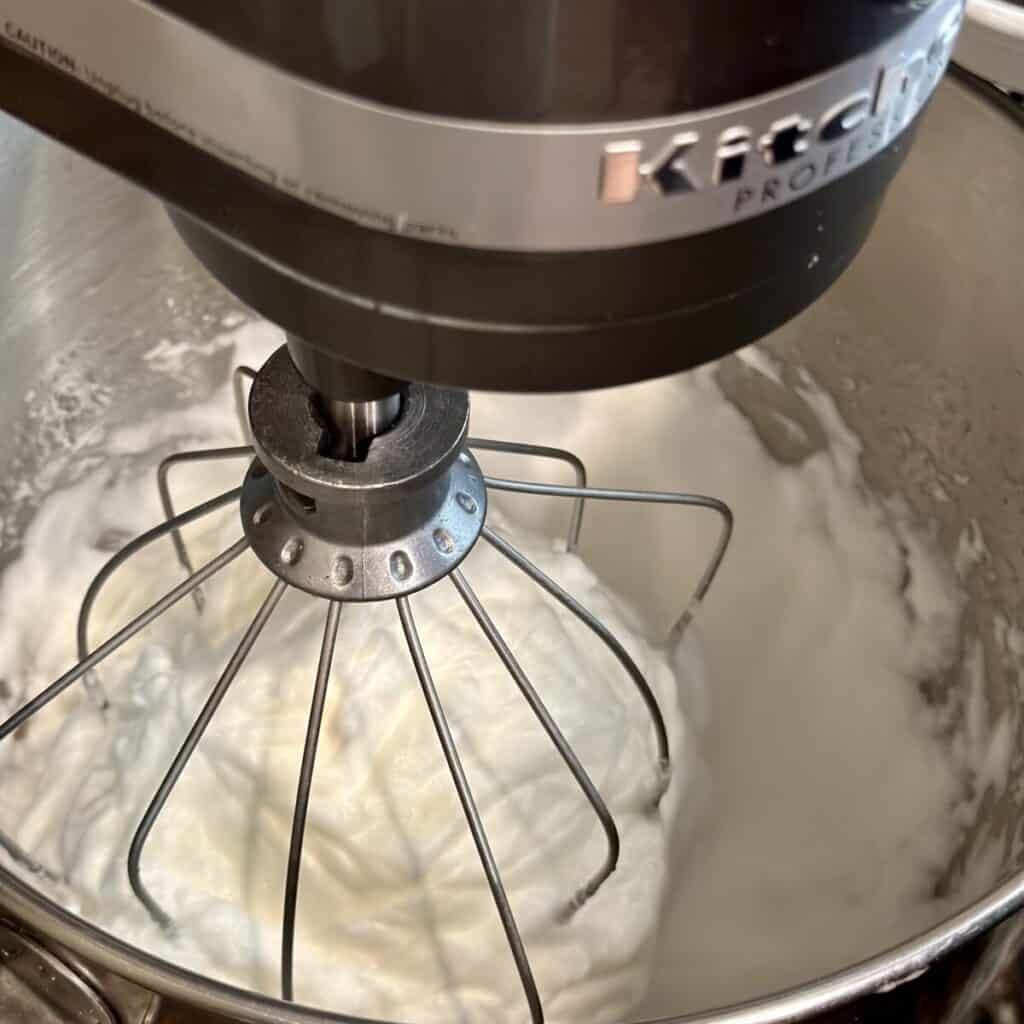
- With the mixer still running, gradually add the granulated sugar, a tablespoon at a time, while continuing to beat the egg whites. This process should take about 2-3 minutes until all the sugar is incorporated. Continue beating the egg whites until stiff, glossy peaks form.
- Whip marshmallow cream into the mixture for 15 seconds at medium speed.
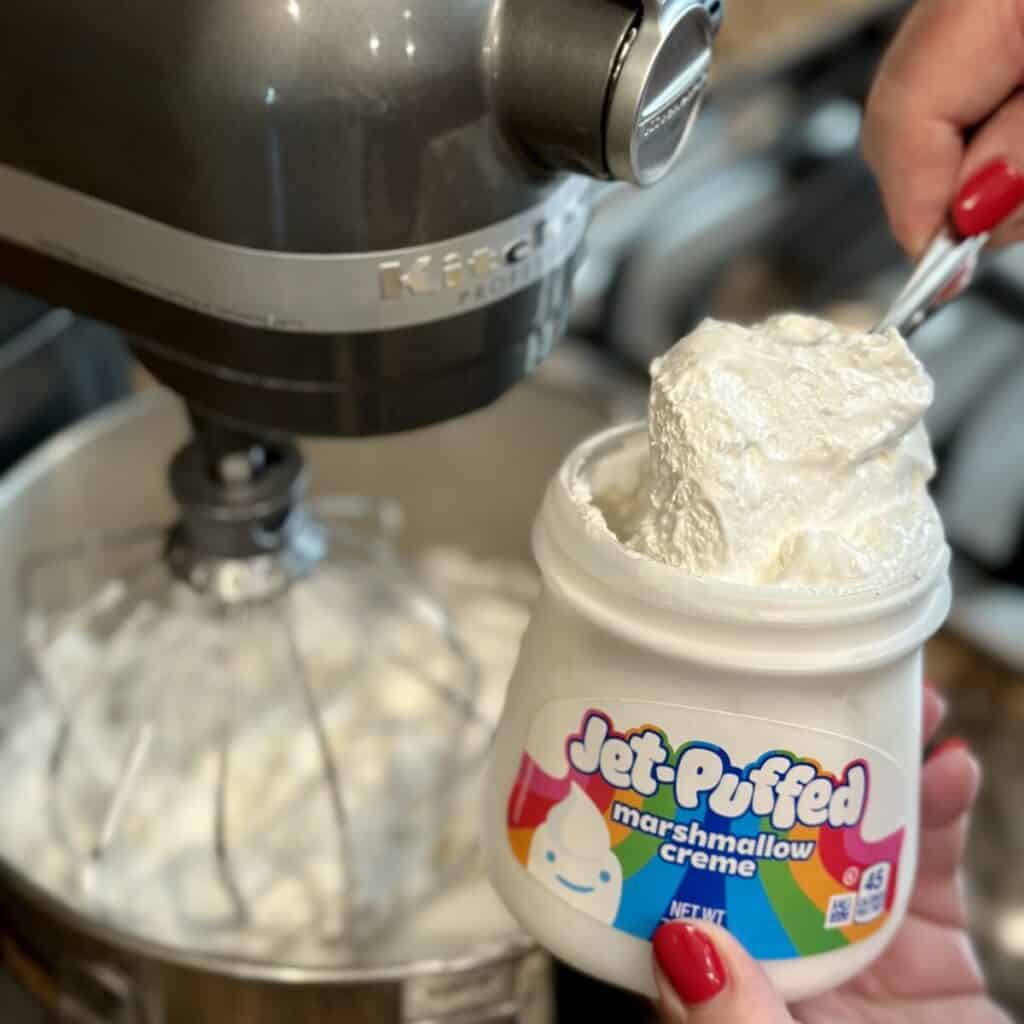
Pro Tip: Adding marshmallow cream to your meringue actually helps to stabilize the egg whites, making the recipe more fail-proof.
Substitutes for Coconut
If you’re not a coconut lover, there’s an easy fix! Simply omit the coconut from the recipe. You’ll have yourself a delicious Cream Pie, which is another way my mom often makes it.
In fact, you can easily make this recipe as one Cream Pie and one Coconut Pie. Simply pour half of the prepared custard in one pie shell, then fold 1/4 cup coconut into the remaining filling in the pan. Add the coconut filling to the second pie crust. Top both pies with the prepared meringue then top the coconut filling pie with 1/4 cup coconut.
Expert Tips and Variations
- Crust Options: You can choose to make a homemade pie crust that you blind bake first. You can also use a store-bought refrigerated roll-out style pastry crust. You’ll need to press and bake the crusts in pie pans first.
- Topping Variation: If you’re not a fan of homemade meringue, you can also top the coconut custard filling with fresh whipped cream. Allow the pie to cool completely before adding the whipped cream. You can also dollop whipped cream on individual servings.
- How to Make Fresh Whipped Cream: In a large mixing bowl, combine 3 cups heavy whipping cream, 1 cup powdered sugar and 1 1/2 teaspoons vanilla extract. Beat on high speed with a hand mixer until stiff peaks form.
- Coconut Options: On top of the meringue, you can use the sweetened coconut as the recipe specifies or coconut flakes.
Why Did my Meringue Weep?
Meringue weeping, also known as “syneresis,” occurs when liquid releases from the meringue after it has been baked. This liquid can pool on the surface of the pie, resulting in a watery layer beneath the fluffy meringue topping. Several factors can contribute to meringue weeping:
- Incomplete Dissolution of Sugar: If the sugar is not fully dissolved into the egg whites during the meringue preparation, it can create a grainy texture that leads to weeping.
- Overbeating the Meringue: Beating the egg whites for too long or at too high a speed can cause them to become over-aerated, resulting in an unstable meringue that is prone to weeping.
- Underbaking or Overbaking: Incorrect baking times or temperatures can lead to meringue weeping. Underbaking can result in an unstable meringue that hasn’t fully set, while overbaking can cause the proteins in the meringue to shrink and expel moisture.
- Moisture from the Filling: If the filling is too hot when the meringue is applied, steam can be trapped beneath the meringue, leading to excess moisture and weeping as it cools.
- Rapid Changes in Temperature: Sudden temperature changes, such as transferring a hot pie to a cold environment or vice versa, can cause condensation to form on the surface of the meringue, contributing to weeping.
- Undercooking the Cornstarch or Flour in the Filling: If the thickening agent (cornstarch or flour) in the filling is not cooked adequately, it can release excess moisture as it cools, contributing to meringue weeping.
To prevent meringue weeping, it’s essential to ensure that the sugar is fully dissolved, the meringue is properly stabilized, and the pie is baked at the correct temperature for the appropriate duration. Additionally, allowing the pie to cool gradually and avoiding rapid temperature changes can help minimize the risk of weeping.
Storage and Freezing
Storing a coconut cream pie requires a bit of care to maintain its freshness and texture. Here’s how to do it:
- Cooling: Allow the pie to cool completely at room temperature before attempting to store it.
- Refrigeration: Cover it loosely with plastic wrap or aluminum foil to protect it from drying out or absorbing any odors from the fridge. A tall airtight container works great as well.
- Avoiding Moisture: To prevent the meringue from becoming soggy, avoid placing any cover directly on top of the meringue. Instead, create a tent-like shape with the plastic wrap or foil, ensuring that it doesn’t touch the meringue.
- Storage Duration: Coconut cream pies can typically be stored in the refrigerator for up to 3-4 days. However, for the best taste and texture, it’s recommended to consume within the first couple of days.
- Optional Reheating: If desired, you can briefly reheat individual slices in the oven at a low temperature (around 250°F or 120°C) for a few minutes to refresh the crust and meringue. Be careful not to overheat it, as this can cause the meringue to deflate or become rubbery.
By following these storage guidelines, you can ensure that your coconut cream pie retains its deliciousness and remains enjoyable for as long as possible.
Frequently Asked Questions
A cream pie usually has a filling that’s cooked on the stovetop and then sets in the fridge. A custard filling can be cooked on the stovetop but then is often baked in the crust as well.
This recipe calls for sweetened, but either sweetened or unsweetened coconut can be used, depending on your preference for sweetness.
You can use either a homemade or store-bought pie crust for your coconut meringue pie. Homemade crusts offer a fresh, customizable option, while store-bought crusts provide convenience and save time.
It’s best to prepare a coconut cream pie the day it will be served to maintain its freshness and texture.
Leftover coconut meringue pie should be stored in the refrigerator, loosely covered with plastic wrap or aluminum foil to prevent the meringue from absorbing odors or drying out. Enjoy within 2-3 days for the best taste and texture.
It’s not recommended to freeze, as the meringue may become watery and lose its texture upon thawing. However, you can freeze the unfilled crust and the coconut filling separately, then assemble and bake the pie when ready to serve.
To prevent meringue weeping, ensure that the sugar is fully dissolved in the egg whites, avoid overbeating the meringue, spread the meringue over hot filling, and bake the pie at the correct temperature for the specified duration. Gradually cooling the pie after baking can also help minimize weeping.
More Old-Fashioned Desserts
Coconut Meringue Pie
Ingredients
Filling
- 1 1/2 cups granulated sugar
- 2/3 cup all-purpose flour
- 12 ounces evaporated milk
- 6 egg yolks
- 1 1/2 cups milk
- 1/2 cup butter
- 1 cup sweetened shredded coconut divided
- 2 frozen 9-inch pie shells baked per package directions
Meringue
- 6 egg whites
- 2/3 cup granulated sugar
- 1/2 cup marshmallow cream
Instructions
Coconut Cream Filling
- Preheat oven to 350°F.
- In a small saucepan, combine sugar and flour. Whisk in evaporated milk and egg yolks until smooth. Turn the pan to medium heat.
- Stirring constantly, add milk. Once the sugar dissolves, add butter and continue stirring.
- Cook until mixture thickens and comes to a gentle boil. The mixture will appear to bubble or burp. This should take about 5-7 minutes.
- Turn off the heat and carefully fold 1/2 cup coconut into the hot filling.
- Divide the filling equally into the pre-baked pie shells.
- Quickly spread the meringue over the hot pie filling. Spread the meringue to the edge of the pie pastry to seal it and prevent it from shrinking as it bakes (see below). Use a spoon to swirl and twist the meringue as you spread it.
- Evenly sprinkle the remaining coconut on top of both pies.
- Bake 15-17 minutes, or until the meringue is golden brown on top.
Meringue
- In a clean, dry mixing bowl, beat the egg whites on medium speed with an electric mixer until they become frothy. This usually takes about 1-2 minutes.
- With the mixer still running, gradually add the granulated sugar, a tablespoon at a time, while continuing to beat the egg whites. This process should take about 2-3 minutes until all the sugar is incorporated.
- Continue beating the egg whites until stiff, glossy peaks form.
- Whip marshmallow cream into the mixture for 15 seconds at medium speed.
Video
Notes
-
- Crust Options: You can choose to make a homemade pie crust that you blind bake first. You can also use a store-bought refrigerated roll-out style pie crust. You’ll need to press and bake the crusts in pie pans first.
-
- Topping Variation: If you’re not a fan of homemade meringue, you can also top the coconut custard filling with fresh whipped cream. Allow the pie to cool completely before adding the whipped cream. You can also dollop whipped cream on individual servings.
-
- How to Make Fresh Whipped Cream: In a large mixing bowl, combine 3 cups heavy whipping cream, 1 cup powdered sugar and 1 1/2 teaspoons vanilla extract. Beat on high speed with a hand mixer until stiff peaks form.
-
- Topping Variation: If you’re not a fan of homemade meringue, you can also top the coconut custard filling with fresh whipped cream. Allow the pie to cool completely before adding the whipped cream. You can also dollop whipped cream on individual servings.
-
- Coconut Options: On top of the meringue, you can use the sweetened coconut as the recipe specifies or coconut flakes.
Nutrition

About Laura
Taught by some of the best, cooking and entertaining has always been my favorite hobby. Food is my love language! The conception of Dinner in 321 came from my family talks that sharing our dinners would help others learn new skills, tasty recipes, and make cooking fun! Read more…




I tasted the filling and it just wasn’t right and I realized it was lacking vanilla.
I suppose the coconut pies you’ve had in the past had vanilla, but this one intentionally does not – and tastes as intended 🙂 That’s an easy addition though if someone wants that.
Pie is delicious! Did have weeping so next time I make will be careful to make sure sugar dissolves good and not over whip. Definitely a keeper
Awwww!! That makes my heart so happy to hear!! Thank you SO much!!!🥰
Going to try your mom’s coconut pie recipe sounds good. Never heard of using marshmallow cream in meringue have to try that.
YAY!!! I hope you love it too!😁❤️
I couldn’t find the recipe card
It’s at the very bottom of the page 🙂
I definitely am going to make this delicious looking pie. Could this be made in deep dish pie crusts? Would it be too much filling for just one pie?
It will probably be a little more shallow in the crust, but I could see it working 🙂
Made this pie back in February. Could not find my recipe. Located Laura yesterday and she emailed me the site to get it. I’m making it, again, tomorrow. So anxious to make it again. It’s the best coconut pie I have ever put in my mouth. Thank you Laura.
That makes my heart so happy to hear, Mildred! Thank you SO MUCH!! I’m so happy you made it and liked it so much!
Coconut pie is my all time favorite! I’ve never had it with meringue so I decided to try your recipe. WOW! This is my new favorite!
YAY!!! I’m so happy it’s a new favorite!!
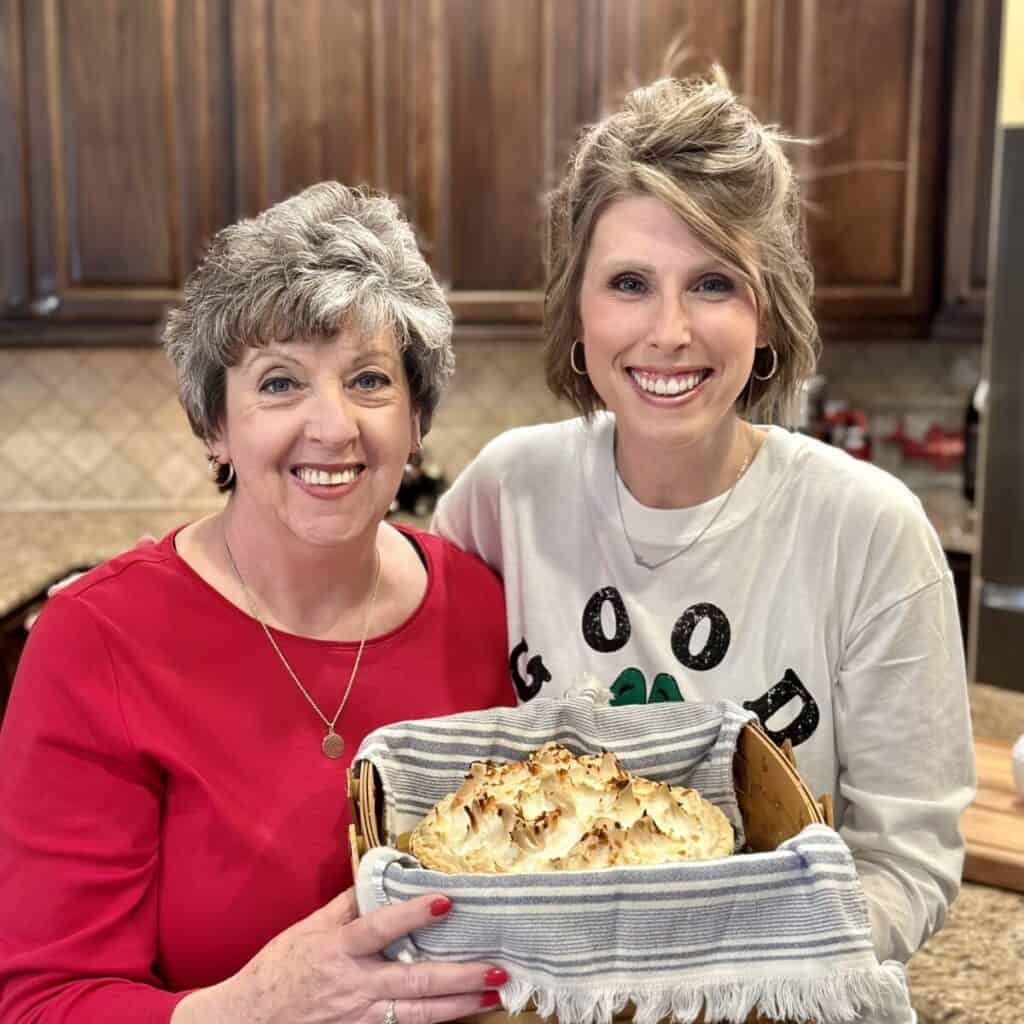
First off, such a cute picture of you and your mom!! Second, gah, great pie! Made it for a friend who ADORES all things coconut, I have never heard of that tip to add Masrhmallow creme to merginue, it was a fun twist! Great recipe!
Aww!! It means so much to me that you liked my sweet mom in it and that you and your friend liked the pie so much! THANK YOU!!
Laura, I just recently found your page, and I’m interested in the recipe for your mom’s Coconut Cream Pie, but I’m just curious about flavoring. I have made a similar Butterscotch Cream Pie and that filling calls for vanilla flavoring. Thanks in advance!
I’m so happy you’re here, Kim!! Mom’s coconut cream doesn’t have extract in it, but you could add it if you’d like. Her other pies do have extract in them 🙂 I hope you love it!
Sounds delicious! Do you serve this at room temperature or do you chill before serving?
Warm or room temperature initially, then refrigerate. I can eat it straight from the fridge, but sometimes I’ll do 10-20 seconds in the microwave.
Help with the meringue recipe…that’s where I have trouble
From the recipe, what are you having trouble with?